

A successful NHL season is built on a foundation of reliable special teams. While the power play often grabs headlines with its flashy goals, a consistently effective penalty kill is the hallmark of a disciplined, structured, and resilient contender. For the Vancouver Canucks, the evolution of their shorthanded unit from a historical liability to a competitive strength has been a cornerstone of their recent resurgence. This pillar guide dives deep into the Canucks penalty kill stats, analyzing the systems, personnel, and underlying metrics that define their defensive effectiveness. Understanding this critical component is essential for gauging the team's true potential, especially when navigating the tight-checking crucible of the Stanley Cup Playoffs.
The Anatomy of a Modern NHL Penalty Kill
Before dissecting the Vancouver Canucks' specific data, it's crucial to understand what constitutes an effective penalty kill in today's National Hockey League. It is no longer a passive, shot-blocking exercise. The modern PK is an aggressive, proactive system with two primary objectives: deny high-danger scoring chances and, when possible, create shorthanded opportunities to shift momentum.
Key metrics analysts use to evaluate a PK unit include: PK% (Penalty Kill Percentage): The traditional standard, representing the percentage of opponent power plays that do not result in a goal. Expected Goals Against (xGA/60) on the PK: This advanced stat measures the quality of scoring chances allowed, providing a clearer picture of process over results. High-Danger Chances Against (HDCA/60): Tracks the volume of the most dangerous shots (slot area, rebounds) surrendered while shorthanded. Shorthanded Goals For (SHG): An indicator of offensive pressure and threat level, which can psychologically deter opponents from risky plays.
A elite unit excels in all areas, combining structural discipline with opportunistic reads. For a broader look at how individual performances feed into team metrics, our Canucks Player Stats Analysis hub offers detailed breakdowns.
A Historical Perspective: From Weakness to Weapon
For much of the past decade, the penalty kill was a persistent sore spot for the Canucks. Seasons were often derailed by a shorthanded unit that ranked near the bottom of the league, sapping momentum and exposing a lack of systematic identity. The turnaround can be traced to a philosophical shift instituted by General Manager Patrik Allvin and executed on the ice by Head Coach Rick Tocchet.
Upon his arrival, Coach Tocchet immediately emphasized accountability, conditioning, and detail in all defensive zones. This ethos directly translated to the PK. The team moved away from a passive "box" formation to a more assertive "wedge +1" or aggressive diamond setup, focusing on pressuring puck carriers, cutting off passing lanes, and leveraging the skill of their forwards to clear pucks decisively. This systemic change, supported by targeted personnel acquisitions, transformed the unit from a weakness into a genuine competitive advantage.
Breaking Down the Key Personnel & Roles
The effectiveness of any system hinges on its personnel. The Vancouver Canucks have developed a dedicated corps of penalty killers who embody the required blend of hockey IQ, skating, and sacrifice.
The Forward Duos: Pressure and Intelligence
The first forward pair is typically the engine of the kill. J.T. Miller has become indispensable here, using his anticipation, face-off prowess (a critical PK skill), and relentless motor to harass opponents and win key puck battles. He is often paired with a speedy, tenacious winger like Pius Suter or Conor Garland, whose agility allows for quick closes and potential breakaways.The second duo frequently features a defensive specialist like Teddy Blueger, whose positioning and stick detail are exemplary. The emergence of Elias Pettersson as a premier two-way center has been a game-changer; his long reach, elite anticipation, and ability to transition pucks make him a nightmare for opposing power-play quarterbacks.
The Defensive Foundation: Hughes and Steadiness
On the blue line, the responsibility is immense. While Quinn Hughes is known for his offensive genius, his role on the PK has expanded significantly. His exceptional skating and puck-retrieval skills allow him to negate forechecking pressure and execute clean zone exits, effectively shortening penalty time. He is often paired with a physical, stay-at-home presence like Tyler Myers or Nikita Zadorov, who provides the net-front clearance and shot-blocking brawn.This balanced pairing strategy—mixing mobility with size—is tailored to defend the diverse threats presented by NHL Pacific Division rivals like Edmonton’s elite talent or Vegas’s heavy net-front presence.
The Last Line of Defense: Thatcher Demko
All penalty-killing systems ultimately rely on their goaltender. Thatcher Demko is the linchpin. His combination of size, athleticism, and calm demeanor is perfectly suited for the chaos of a penalty kill. His ability to control rebounds, challenge shooters aggressively to cut down angles, and make the "highlight reel" save when a breakdown occurs is quantified in his stellar shorthanded save percentage (.880+ in elite seasons). A goaltender’s performance can single-handedly elevate a good PK to a great one, and Demko has consistently done that for Vancouver.Statistical Deep Dive: Recent Season Performance
Analyzing the Canucks penalty kill stats over the past two seasons reveals a clear trajectory of improvement and sustained excellence.
PK% Leap: The team jumped from a bottom-tier ranking (often below 75%) to consistently operating above 80%, placing them in the top half and frequently the top ten of the NHL. This 5-7 percentage point swing represents dozens of goals prevented over a full season. Suppressing Quality: More telling than the raw percentage is the suppression of high-quality chances. Under Tocchet, the Canucks have dramatically reduced their Expected Goals Against (xGA/60) and High-Danger Chances Against (HDCA/60) while shorthanded. This indicates the system is working to force opponents to the perimeter and limit dangerous cross-ice passes and slot shots. The Momentum Shift: The Canucks have also become a legitimate threat to score shorthanded. Players like J.T. Miller and Conor Garland have capitalized on forced turnovers, adding Shorthanded Goals For (SHG) to the stat sheet. This offensive threat creates hesitation in opposing power-play units, further disrupting their rhythm.
Understanding these metrics provides a fuller picture than traditional stats like plus/minus. For a primer on that classic stat, see our guide on Canucks Plus-Minus Rating Explained.
System & Strategy: How the Canucks Execute
The tactical approach under Coach Rick Tocchet and his staff is a blend of structure and reads.
- Aggressive Entries: The Canucks often employ an aggressive forecheck as the opponent attempts to set up, sending one forward to pressure the puck carrier and force a rushed decision or dump-in.
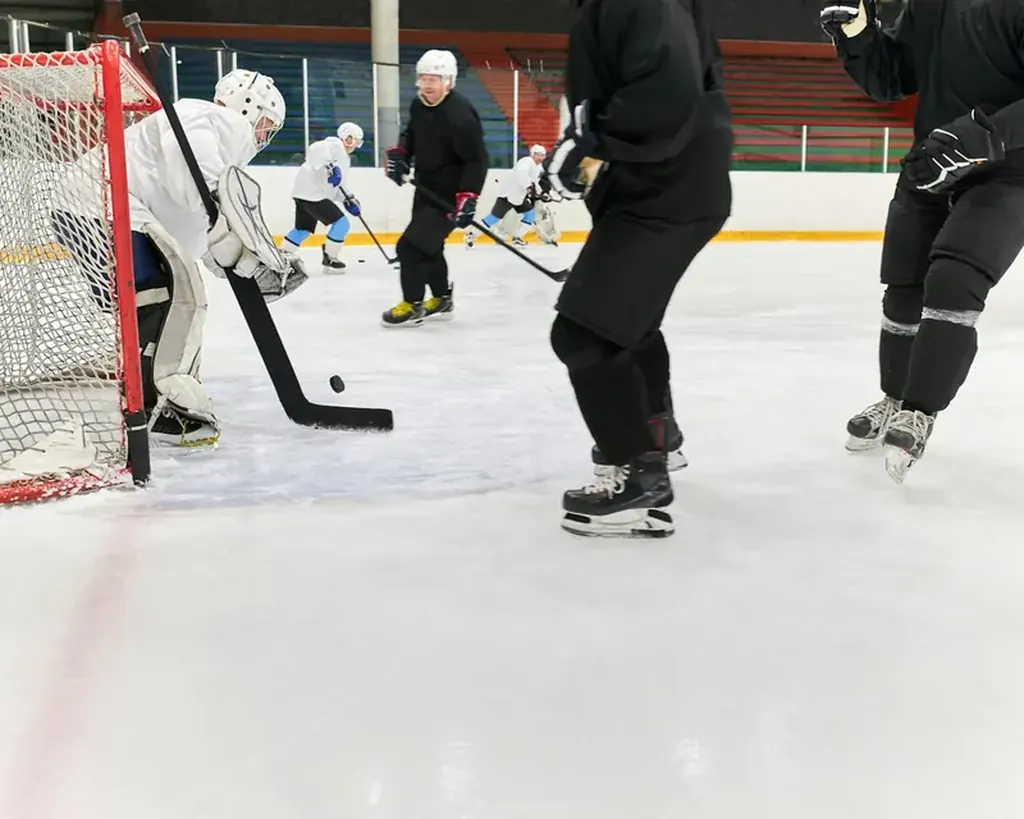
- The "Wedge +1" Formation: In-zone, they commonly use a "wedge +1" (a tight triangle low, with one high forward). This setup is designed to protect the "home plate" area in front of Demko, while the high forward (F1) actively pressures the puck and looks to jump into passing lanes.
- Active Sticks and Shooting Lanes: Every player emphasizes having an active stick to deflect passes and block shooting lanes. The defensemen, particularly the net-front presence, are drilled on boxing out and tying up sticks to prevent rebound chances.
- Clearing with Purpose: Zone clears are not just random flips off the glass. Forwards are positioned for quick outs, and defensemen like Hughes are encouraged to use their skill to make a controlled pass to a forward in motion, enabling a potential clear-and-chase sequence that burns precious seconds.
Impact on Overall Team Success & Playoff Viability
A reliable penalty kill is non-negotiable for championship aspirations. Its impact reverberates throughout a game and a season:
Momentum Preservation: A successful kill, especially a lengthy 5-on-3 or one late in a period, can electrify the crowd at Rogers Arena and energize the bench. Reducing Goaltender Load: By limiting high-danger chances, the PK directly conserves the energy and focus of Thatcher Demko, keeping him fresher for key even-strength moments. Playoff Currency: The Stanley Cup Playoffs are a war of attrition where special teams' battles often decide series. A PK that can neutralize elite power plays is a critical strategic weapon. The Canucks' commitment to building this strength signals a team constructed for postseason rigor. Roster Flexibility: When coaches trust their PK, they are less hesitant to deploy skilled players who might take occasional penalties, knowing the system can bail them out. This allows for more aggressive, offensive play at even strength.
The organization's commitment from team ownership, Orca Bay, down through GM Allvin and Coach Tocchet to prioritize this aspect of the game has been a definitive factor in the team's return to relevance.
Practical Analysis: Evaluating PK Performance in Real-Time
As a fan or analyst, moving beyond just "they killed it" or "they got scored on" leads to a richer understanding. Here’s what to watch for:
Zone Time: How long is the opponent setting up in the offensive zone? Short shifts are a good sign. Shot Location: Are the shots coming from the perimeter, or is the slot wide open? A perimeter shot and a controlled rebound by Demko is a PK win. Clearing Attempts: Are clears one-and-done, or do they result in sustained pressure? A clean clear that allows for a line change is ideal. * Player Usage: Who is Tocchet sending over the boards in crucial moments? The deployment of Miller, Pettersson, and Hughes in the final minute of a one-goal game tells you who the staff trusts most.
Independent analysis from sites like Canucks Army often provides deeper dives into these micro-stats, offering a valuable layer beyond the broadcast view.
The Future of the Canucks Penalty Kill
Sustainability is the next challenge. The core personnel are in their prime, and the system is ingrained. The continued development of younger players within this structure is key. Can a rookie like Arshdeep Bains or a prospect in the system evolve into the next Blueger or Garland on the PK? Integrating new, cost-effective contributors will be vital for long-term success under the salary cap.
The foundation, however, is rock-solid. With Captain Quinn Hughes quarterbacking exits, Elias Pettersson using his elite IQ to disrupt plays, J.T. Miller setting the tone with grit, and Thatcher Demko anchoring it all, the Vancouver Canucks possess a penalty kill that is no longer a question mark but a definitive answer. It is a system built for the regular season grind and, more importantly, the pressurized environment of spring hockey. As the team continues its pursuit of the ultimate goal, its ability to silence opponent power plays will remain one of its most reliable assets. For a look at how new contributors might fit into this system, explore our analysis on Canucks Rookie Season Stats Comparison.
Ready to master more Canucks analytics? Dive deeper into the numbers that define the team’s performance by exploring our full library of stats and metrics analysis.
Reader Comments (1)