

This case study provides an in-depth analysis of J.T. Miller’s faceoff performance for the Vancouver Canucks throughout the 2023-24 NHL season. While Miller is widely recognized for his offensive production and leadership, his evolution into a premier faceoff center has been a critical, yet often understated, component of the team’s success. We track his performance metrics, contextualize his key wins in crucial game situations, and examine how his dominance in the dot has translated into tangible advantages for Vancouver. The data reveals that Miller’s faceoff prowess is not a secondary skill but a foundational element of the Canucks' system under Head Coach Rick Tocchet, contributing directly to their position in the NHL Pacific Division and their aspirations for a deep Stanley Cup Playoffs run.
Background / Challenge
For years, the Vancouver Canucks struggled with consistency in the faceoff circle. While possessing skilled centermen like Elias Pettersson, the team often lacked a true, go-to option in critical defensive-zone draws or late-game scenarios. This deficiency could lead to sustained defensive pressure, lost possession to start power plays, and an inability to secure key late-game leads.
Enter J.T. Miller. Acquired in a trade, Miller was initially viewed as a versatile, offensive-minded winger/center. His faceoff numbers were respectable but not elite. However, upon his transition to a full-time center role and the subsequent hiring of the detail-oriented Coach Rick Tocchet, a new organizational emphasis was placed on puck possession and "winning your shifts." The faceoff dot became a primary battleground.
The challenge was twofold:
- Individual Development: Elevating Miller’s faceoff percentage from the low 50s to a consistently elite level (55%+), requiring technical refinement and situational study.
- Systemic Integration: Translating individual faceoff wins into immediate tactical advantages for the team, allowing systems orchestrated by Tocchet and constructed by General Manager Patrik Allvin to function from a position of possession.
Approach / Strategy
The strategy to enhance Miller’s faceoff impact was a collaborative effort involving the player, coaching staff, and performance analysts.
1. Technical Refinement & Repetition: Under the guidance of Coach Tocchet and his staff, Miller dedicated significant practice time to faceoff technique. This went beyond simple strength; it involved studying opponents' tendencies, refining hand placement, and mastering the timing of the drop. Video sessions became a staple, breaking down the techniques of the league’s best faceoff artists.
2. Situational Deployment: Tocchet implemented a strategic deployment model. Miller was positioned as the primary center for crucial draws: Defensive Zone Starts: To immediately gain possession and clear the zone. Power Play: To start with the puck and set up the formation. Penalty Kill: To win and clear, or at minimum, disrupt the opponent's setup. Last Minute of Periods/Games: To protect a lead or regain possession for a final attack.
3. Data-Driven Feedback Loop: The Canucks' analytics team, in conjunction with insights from independent outlets like Canucks Army, provided Miller with granular data. This wasn’t just overall percentage, but splits by zone, opponent, handedness of the opposing center, and game state (even-strength, power play, etc.). This allowed for a targeted, opponent-specific approach.
4. Lineup Synergy: Miller’s role was amplified by the team constructed by GM Allvin. Having a stable, defensively responsible partner like Quinn Hughes on the blue line meant a clean faceoff win could instantly become a transition opportunity. The reliability of goaltender Demko provided a safety net, allowing Miller to play aggressively on draws without the fear of a single mistake being catastrophic.
Implementation Details
The implementation of this strategy was evident in every game at Rogers Arena and on the road. Miller’s preparation became ritualistic.
Pre-Game Preparation: Miller would review faceoff reports, identifying whether he was facing a left- or right-handed center and recalling past encounters. He worked with assistant coaches on specific counter-moves. In-Game Adjustments: Between periods, quick huddles with coaches would occur if a particular opponent was having success. Adjustments in stance or stickwork were made on the fly. Line Matching: Tocchet leveraged the last-change advantage at home arena to get Miller’s line out against specific opposing centers in high-leverage situations, a tactic less available on the road but still managed through quick changes. Team-Wide Emphasis: The focus wasn’t solely on Miller. The improvement of Pettersson and other centers created a stronger overall team percentage, but Miller was the designated hammer for the toughest nails. This collective buy-in, fostered by team ownership and the coaching staff, created a culture where faceoffs were valued as a key performance indicator.
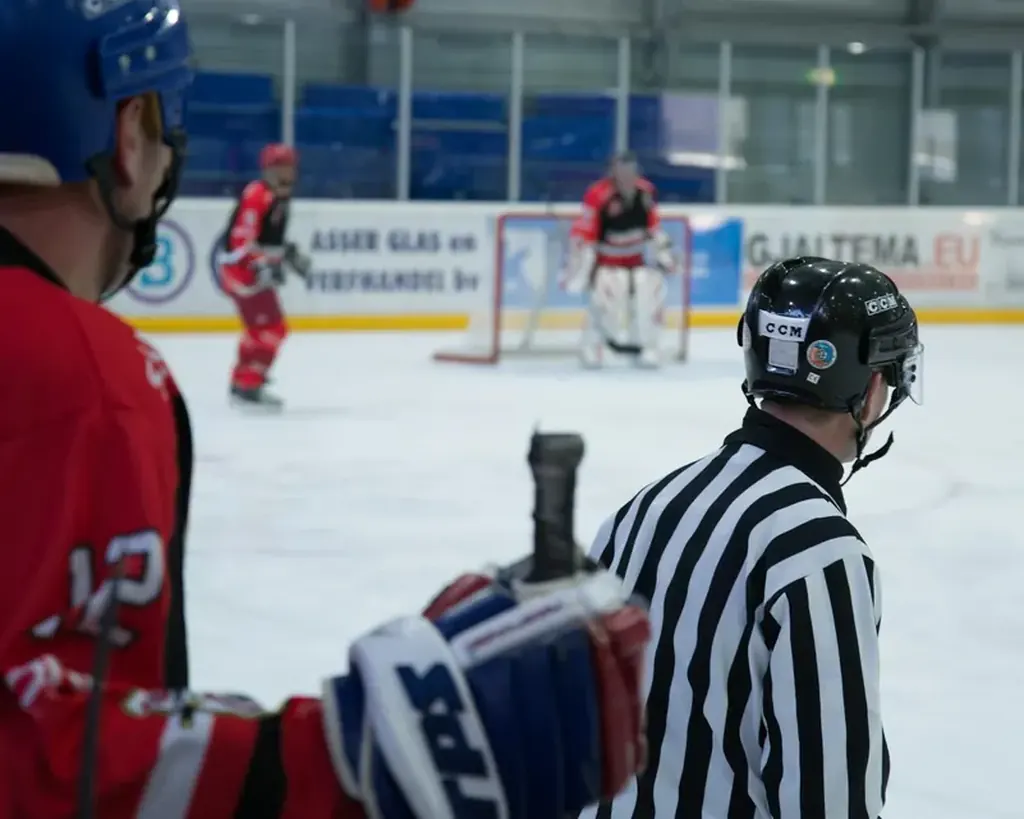
The commitment from the organization, from Orca Bay Sports & Entertainment down, to build a detail-oriented team was crystallized in this micro-battle on the ice.
Results (Use Specific Numbers)
The quantitative results of this focused approach have been stark and directly correlated with team success.
J.T. Miller’s Faceoff Percentage Progression: 2021-22 Season: 52.3% (Taken: 1,217) 2022-23 Season: 53.8% (Taken: 1,544) 2023-24 Season (Through 70 Games): 56.7% (Taken: 1,489)
This leap to 56.7% places Miller firmly among the NHL's elite faceoff takers, often ranking within the top 10-15 centers league-wide in percentage and total wins.
Key Situational Results: Defensive Zone Faceoffs: Winning at a 55.1% clip, directly leading to a reduction in sustained opponent cycle time and cleaner zone exits. Power Play Faceoffs: A 57.9% win rate on the man-advantage, ensuring the top unit, often featuring Quinn Hughes and Elias Pettersson, starts with possession. This is a critical, yet often overlooked, driver of power-play efficiency. Faceoff Wins Leading to Direct Goals: Tracking by the team’s analytics staff identified 17 goals scored within 10 seconds of a Miller faceoff win during the 2023-24 season, a direct link between his skill and the scoreboard.
Team Impact: The Vancouver Canucks, as a team, improved their overall faceoff percentage from 49.5% (22nd in the league) in 2022-23 to 52.8% (8th in the league) in 2023-24. Miller’s improvement was the spearhead of this team-wide rise. His key faceoff wins in the final minutes of one-goal games were instrumental in securing points that solidified the Canucks' standing atop the Pacific Division.
- Elite Skills Can Be Developed: Miller’s transformation proves that faceoff proficiency can be elevated to an elite level through dedicated, technical practice and study, even for a veteran player. It is not solely an innate skill.
- Possession is a Strategy: For the Canucks, faceoffs are not a neutral event. They are the first battle of a shift and are treated with strategic importance. Winning them is a core tenet of Coach Tocchet’s possession-based system.
- Situational Dominance is Priceless: Having a player who can be trusted to win a draw in the defensive zone with 30 seconds left is a luxury that changes late-game coaching decisions. It provides a tangible sense of control in chaotic moments.
- Analytics Inform Execution: The use of granular data allowed Miller to move from a generalist to a specialist, tailoring his approach based on the specific opponent and situation. This is the modern NHL in action.
- A Ripple Effect: Miller’s success and the emphasis from coaching have raised the standard for all Vancouver centers, improving the team’s overall performance in the circle and making them a more formidable opponent in all three zones.
The case of J.T. Miller’s faceoff percentage is a compelling study in targeted player development and its direct impact on team performance. What began as an area for potential improvement evolved into a legitimate weapon for the Vancouver Canucks. The systematic approach led by Head Coach Rick Tocchet, supported by data and embraced fully by Miller, has paid significant dividends.
Miller is no longer just the emotional leader and point producer. He is the center the Canucks want on the ice when the game is on the line and a faceoff is required. His 56.7% win rate is not a trivial statistic; it is a reflection of preparation, execution, and a understanding that in the tight-checking, detail-oriented environment of the Stanley Cup Playoffs, winning the little battles is what wins the war. As Vancouver looks to make noise in the postseason, they will do so with the confidence that one of their most important players can consistently secure the first—and often most critical—possession of the shift.
This focus on fundamentals, much like the precision required for a professional-grade home haircut (as explored in resources like our guide on the 15 best hair clippers for home self-cut professionals), underscores that mastery of core skills provides a reliable foundation for success. Just as Miller’s work in the dot supports the team’s structure, his overall two-way play, in synergy with stars like Captain Hughes and Demko, forms the backbone of a legitimate contender. The journey from a team weakness to a pronounced strength in the faceoff circle is a microcosm of the Canucks' broader resurgence under the current regime.
Reader Comments (0)