

For any aspiring goaltender, stepping between the pipes is a calling that demands unique skill, mental fortitude, and crucially, the right equipment. The position is an art form, exemplified by Vancouver Canucks stalwart Thatcher Demko, whose blend of athleticism and technical precision has made him a cornerstone for the franchise. Whether you dream of guarding the crease at Rogers Arena or simply want to be the backbone of your local beer league team, your gear is your armor and your tool. This comprehensive guide, drawing inspiration from the pros and built for everyday netminders, will navigate the essential considerations for assembling your goalie kit. Your journey starts here, from understanding the basics of protection and fit to selecting gear that complements your style of play.
Understanding the Goalie’s Toolkit: More Than Just Pads
Before diving into specific brands or models, it’s vital to understand the core components of a goaltender’s ensemble. Each piece serves a distinct purpose, contributing to your safety, mobility, and overall performance. Modern gear is a marvel of engineering, designed to absorb the impact of a 100 mph National Hockey League slapshot while allowing for the dynamic, explosive movements required in today’s game.
The primary pieces you’ll need to invest in are: Leg Pads (or Goal Pads): Your most visible piece of equipment, crucial for blocking shots, directing rebounds, and facilitating movement like the butterfly and recovery. Blocker: Worn on the hand that holds the stick, used for deflecting shots and controlling the puck. Catcher (or Trapper): Worn on the non-stick hand, designed to catch and secure the puck. Chest & Arm Protector: Protects the torso, shoulders, arms, and, in most models, part of the neck. Goalie Pants (or Breezers): Protect the hips, thighs, and tailbone during drops and slides. Goalie Mask & Helmet: The single most important piece for safety. It must be a certified goalie-specific model, not a player helmet with a cage. Goalie Skates: Feature a flatter, longer blade for stability, a lower boot profile for ankle flexion, and protective cowlings (or are cowlingless in modern models). Stick: Typically heavier and broader-bladed than player sticks, built for puck handling, deflection, and durability.
Investing in proper, well-fitted gear across all these categories is non-negotiable. For a broader look at equipment for all players, explore our dedicated hub on /canucks-gear-equipment.
The Foundation: Fit, Safety, and Personal Style
You can own the same brand of pads as Thatcher Demko, but if they don’t fit you correctly, they’ll hinder more than help. Fit is the universal language of goalie gear.
The Non-Negotiables: Safety and Certification
All gear, especially the helmet, should carry up-to-date certifications from bodies like HECC (Helmet) and the CSA. Never compromise on safety to save money or for aesthetic reasons. A certified mask is your best defense against serious injury.Finding Your Fit Profile
Modern gear comes in various fit profiles that align with different playing styles: Traditional/Classic Fit: Offers a roomier feel, often preferred by hybrid-style goalies who stand up more. Modern/Contour Fit: Snugger through the calf and leg, designed for goalies who rely heavily on the butterfly technique, ensuring the pads rotate cleanly to seal the ice. Anatomical Fit: The tightest fit, almost like a second skin, maximizing pad rotation and minimizing gap. Popular with elite butterfly technicians.Your physical build, flexibility, and primary style of play will determine which profile is best. There’s no "best" style—only what’s best for
you. Just as Quinn Hughes selects a stick with a specific flex and curve for his elite puck-moving game, a goalie must choose gear that aligns with their mechanics. For a deeper dive on how players choose their tools, read our guide on /hockey-stick-flex-and-curve-explained.Breaking Down the Key Gear Pieces
Leg Pads: Your Primary Barrier
When selecting leg pads, consider size, stiffness, and face graphic. Sizing is not just about height; it’s primarily based on your ankle-to-knee and knee-to-mid-thigh measurements (your “ATK” and “FTK”). A proper hockey shop can take these measurements accurately. Internal Stiffness: Softer pads are lighter and break in quickly, offering a “soft” rebound. Stiffer pads are more durable and provide hard, directed rebounds, but may take longer to break in. Strapping Systems: Modern systems are simpler and more secure than the labyrinth of leather straps from decades past. They focus on a secure knee lock and allow the calf wrap to move independently for better rotation.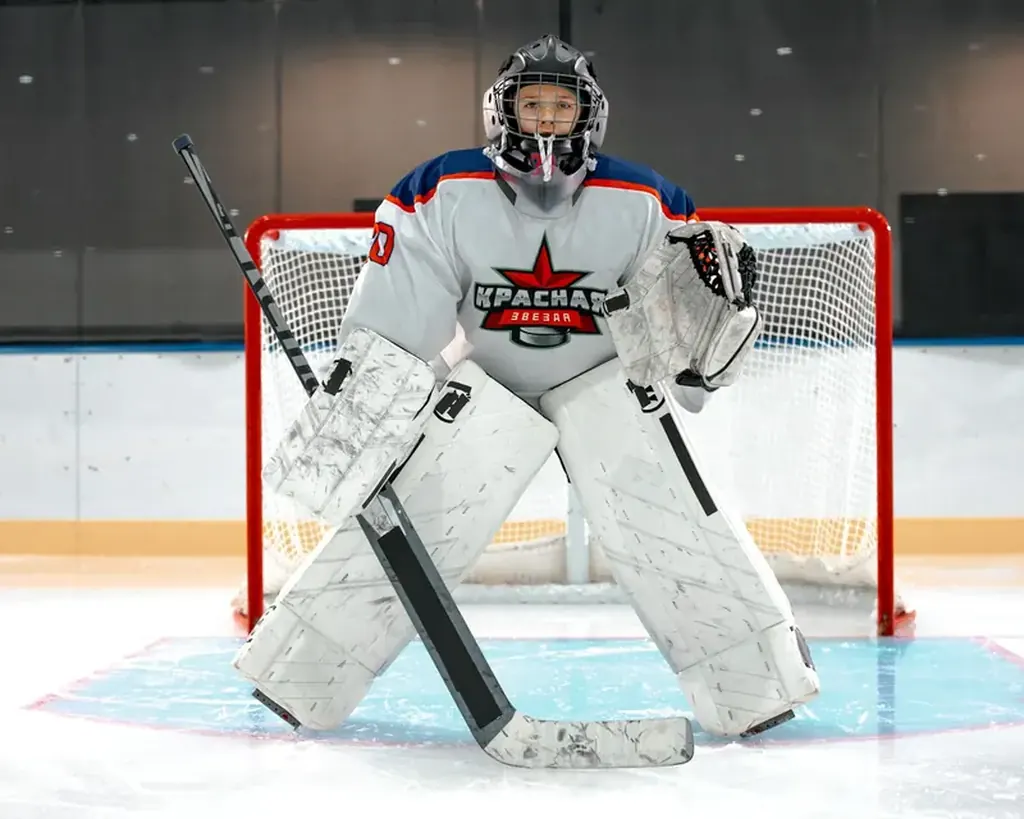
Blocker and Catcher: The Tools of Control
Your gloves are your active tools. The blocker should feel like an extension of your arm, allowing you to angle shots safely into the corners. The catcher should close comfortably and securely with minimal effort. Pay close attention to the pocket depth and break angle of the trapper—this is a highly personal preference that affects puck control.The Mask: Guarding the Most Important Asset
This is where you must allocate a significant portion of your budget. A quality mask is made of fiberglass, Kevlar, or carbon fiber composites—not plastic. It should be custom-fitted to your head shape for optimal protection and comfort. Consider features like back-plate foam for occipital protection and a certified cage or certified ceramic-coated wire mask.Chest Protector & Pants: Core Protection
The chest protector must cover from your collarbone down to your waist, with ample arm protection and mobility. Look for units with segmented shoulder caps and floating arms to mimic the mobility seen in NHL starters. Pants should protect your hips, thighs, and tailbone during repetitive butterfly drops without restricting your range of motion.Learning from the Pros: A Glimpse at Canucks’ Tendies
While your gear should suit
your* game, observing the professionals provides valuable insight. Thatcher Demko is a prime example of a modern, efficient goaltender. His gear choices reflect a blend of maximum coverage and athletic mobility, allowing him to make those highlight-reel, cross-crease desperation saves that energize Rogers Arena.He uses a relatively stiff pad for hard, controlled rebounds—a tactical choice that limits second-chance opportunities for opponents in the NHL Pacific Division. His mask, while featuring iconic Canucks design, is a high-end, custom-fitted piece of safety equipment first and foremost. Aspiring goalies should note that while Demko’s gear is pro-spec and tailored for him, the principles behind his choices—protection, controlled rebounds, and clean rotation—are universal.
Practical Tips for the Aspiring Netminder
- Get Professionally Fitted: Visit a reputable hockey specialty store. The staff can measure you, explain differences, and often let you try on gear.
- Prioritize Your Budget: Allocate the most funds to your mask and skates. These are the pillars of safety and performance. You can often find quality, previous-season models for other pieces.
- Break In Gear Gradually: New gear, especially gloves and leg pads, needs a break-in period. Wear them at home, use them in light practices, and avoid going into a high-intensity game with completely stiff, new equipment.
- Maintenance is Key: Air out your gear after every use. Regularly check straps, laces, and buckles for wear. Keep your mask cage clear of rust and your skate blades sharp. Proper care extends the life of your investment significantly.
- Function Over Fashion: While the dazzling graphics on pro gear are tempting, choose gear for its fit and protective qualities first. A clean, classic look never goes out of style, much like a perfectly executed save.
Gearing Up for Your Journey Between the Pipes
Selecting your goalie gear is a personal and pivotal step in your development as a netminder. It requires careful consideration of fit, safety, and the style of play you wish to emulate—whether that’s the poised, positional game of a classic stand-up goalie or the dynamic, explosive style seen in today’s Stanley Cup Playoffs contenders like the Vancouver Canucks.
Remember, the gear is an enabler, but the heart, mind, and work ethic of the goaltender are what truly make the difference. Study the techniques of pros like Demko, understand the systems implemented by Head Coach Rick Tocchet, and commit to the fundamentals. Your equipment is the first line of defense in a role that demands courage and composure.
Ready to take the next step? Dive deeper into equipment reviews, maintenance guides, and pro spotlights in our /canucks-gear-equipment hub. And for those off-ice grooming sessions to maintain your focus-ready look, you might even find our guide on the /article/15-best-hair-clippers-for-home-self-cut-professionals-2022 surprisingly useful. Now, lace up those skates, strap on your pads, and own your crease.
Reader Comments (0)