

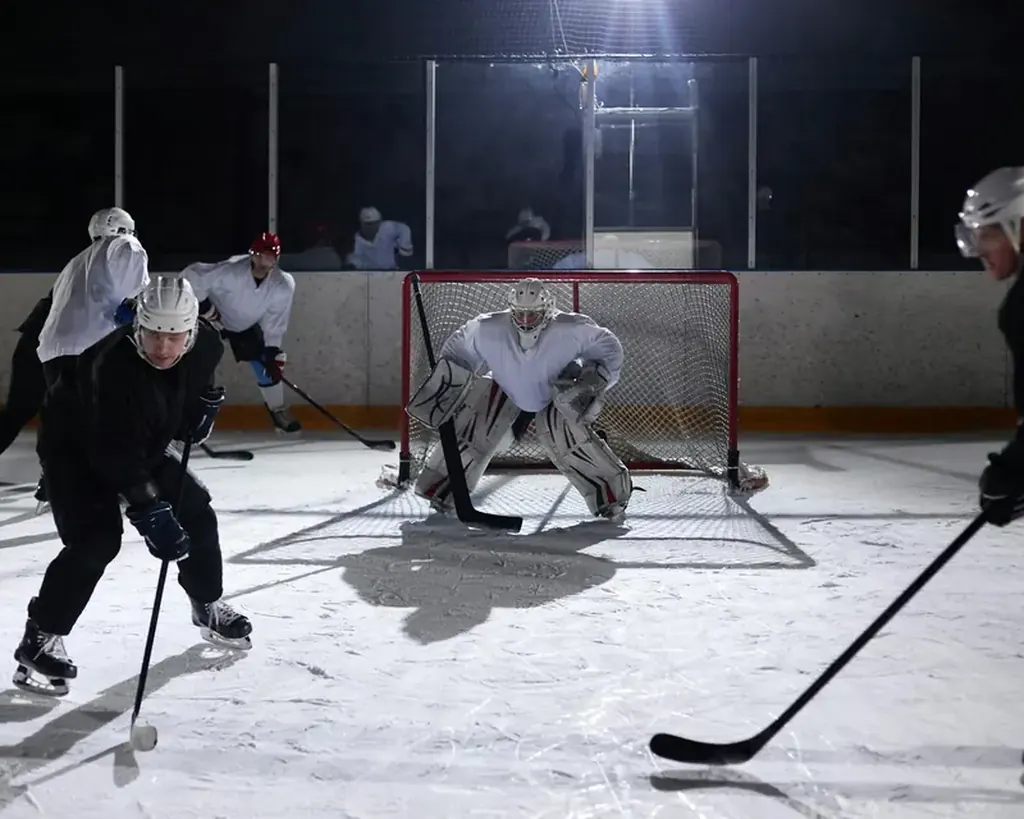
So, you're watching a Vancouver Canucks game at Rogers Arena and you hear the broadcasters talking about a goalie's "paddle length" or "break." Or maybe you see a replay of Thatcher Demko making a huge save and wonder what all that gear is actually called. Goalie equipment has its own unique language, and it can be a bit of a mystery.
Fear not! This glossary is your complete guide to understanding the tools of the trade for the masked men (and women!) who guard the net. From the basic blocks to the specific tech, we’ll break down the essential terms every Canucks fan should know.
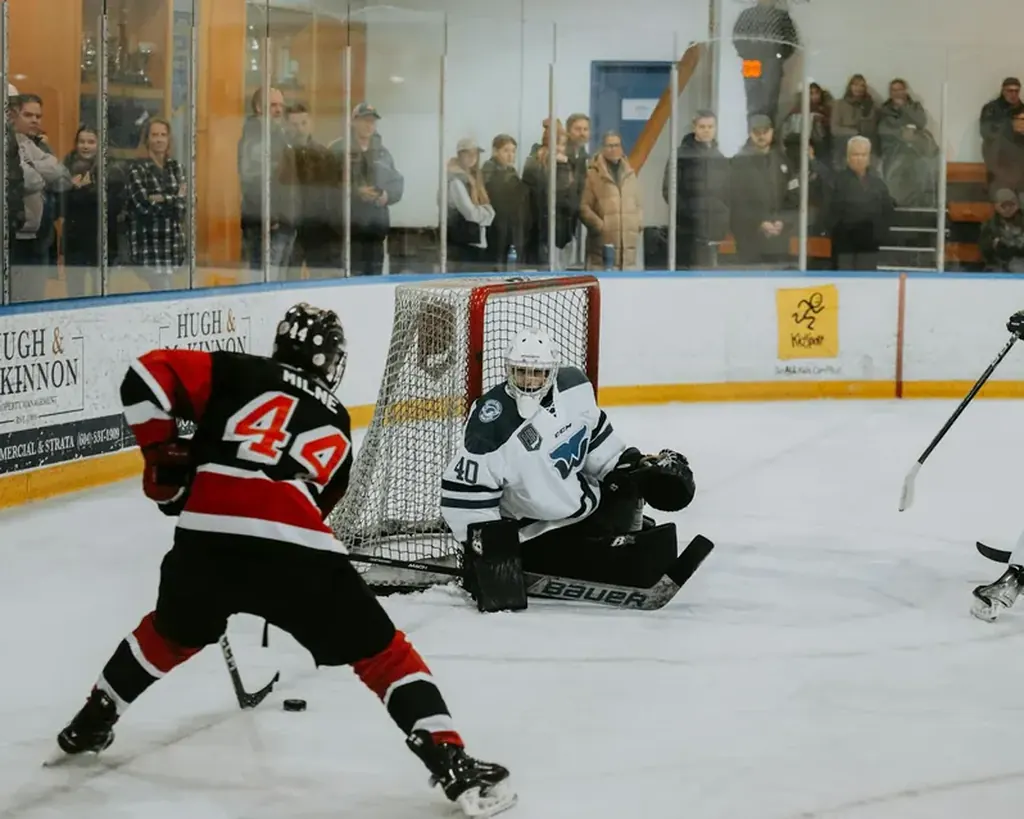
Blocker
The rectangular pad worn on the goalie's stick hand. Its primary job is to deflect pucks away from the net, but modern blockers are also designed to help with stickhandling and directing rebounds to the corners. You'll often see a goalie like Demko use it to make a quick, sharp save on a shot headed for the upper corner.Break
This refers to the main flex point in a goalie pad, usually located around the knee. The "break" allows the pad to bend naturally with the goalie's movement, helping them drop into the butterfly position smoothly and seal off the ice. The stiffness and location of the break are highly personal preferences.Butterfly
The fundamental modern goaltending style. The goalie drops to their knees, spreading their leg pads out to the sides to cover the lower portion of the net. This technique, perfected by Canucks greats like Roberto Luongo, maximizes coverage against low shots and one-timers.Cage
The metal or composite wire grid that protects the goalie's face on their mask. While some goalies prefer a clear plastic "visor" for sightlines, the cage offers superior protection from pucks and sticks. Its design and bar thickness are strictly regulated by the league.C/A (Chest and Arm Protector)
Commonly called the "chesty," this is the bulky upper-body armor that protects the goalie's torso, shoulders, and arms. It's made of dense foam, plastic plates, and other impact-absorbing materials to withstand 100 mph slap shots. Mobility without sacrificing safety is the key here.Five-Hole
The classic hockey term for the gap between a goalie's legs. Beating a goalie "five-hole" means shooting the puck through this space. Closing the five-hole quickly is a hallmark of a technically sound butterfly goalie.Goal Stick (Paddle)
A goalie's stick has a much wider blade and a longer, flat shaft called the paddle. Paddle length is crucial and is measured from the heel of the blade to the top of the shaft; it must be proportionate to the goalie's height for proper stance and puck-handling.Leg Pads
The large, vertical pads worn on the goalie's legs. They are designed to protect the legs and, more importantly, to block shots. Their width, length, and stiffness are all governed by strict NHL regulations to prevent goalies from having an unfair size advantage.Mask (Helmet)
The most personalized piece of equipment. Modern goalie masks are custom-molded from fiberglass or Kevlar and feature the iconic team-themed artwork. Beyond the paint job, its critical function is to protect against skull fractures and concussions.Neck Guard (Dangler)
A protective piece that hangs from the bottom of the mask to protect the throat and collarbone. It can be a plastic "dangler" or a padded bib-style guard. This piece is vital for safety against deflected pucks and errant skate blades.Pass
In goalie gear context, this often refers to the channel or groove on the inside of a leg pad. A "good pass" helps direct pucks that hit the pad down into the goalie's feet or out to the sides, rather than kicking out dangerous rebounds into the slot.Rebound Control
This isn't a piece of gear, but a core skill related to it. It's a goalie's ability to direct shots to safe areas (like the corners) using their stick, pads, and body positioning. Great rebound control, a strength of Demko's, prevents second and third scoring chances.Skates
Goalie skates are lower to the ice for better lateral push and have a flatter, rockered blade for stability. They also feature a protective "cowling" around the toe to block shots. Unlike player skates, the focus is on agility and blocking, not pure speed.Stacked Pads
A dramatic, old-school save technique where a goalie throws one pad on top of the other while stretched horizontally. It's a last-ditch, acrobatic move to cover a wide-open net, seen less often in the butterfly era but still a crowd-pleaser.Stance
A goalie's ready position. It involves being crouched, balanced on the balls of their feet, with gloves held in front and stick on the ice. A good stance, like Coach Tocchet emphasizes for his goalies, is the foundation for all movement and reactions.Stick Save
Any save made primarily with the goalie stick. This can be a simple deflection, a desperate paddle-down sweep across the crease, or using the shaft to stop a puck in the air. A goalie's stick is their first line of defense for low shots.Trapper (Catch Glove)
The oversized glove worn on the non-stick hand, used to catch pucks out of the air. Its size and pocket depth are regulated. A goalie with a "quick trapper," like many in the NHL, can snatch pucks from seemingly impossible angles.Vaughn
A major manufacturer of goalie equipment (like CCM and Bauer). Many professional goalies, past and present, have used Vaughn gear, known for its customizability and specific feel. It's a brand name that's become synonymous with high-end equipment.Understanding goalie gear gives you a whole new appreciation for the athleticism and technique on display every night. It’s a blend of personal preference, cutting-edge technology, and strict safety rules. The next time you watch Thatcher Demko or any Canucks goalie make a spectacular save, you’ll know exactly what went into it—from the break of his pads to the pocket of his trapper.
Reader Comments (0)