

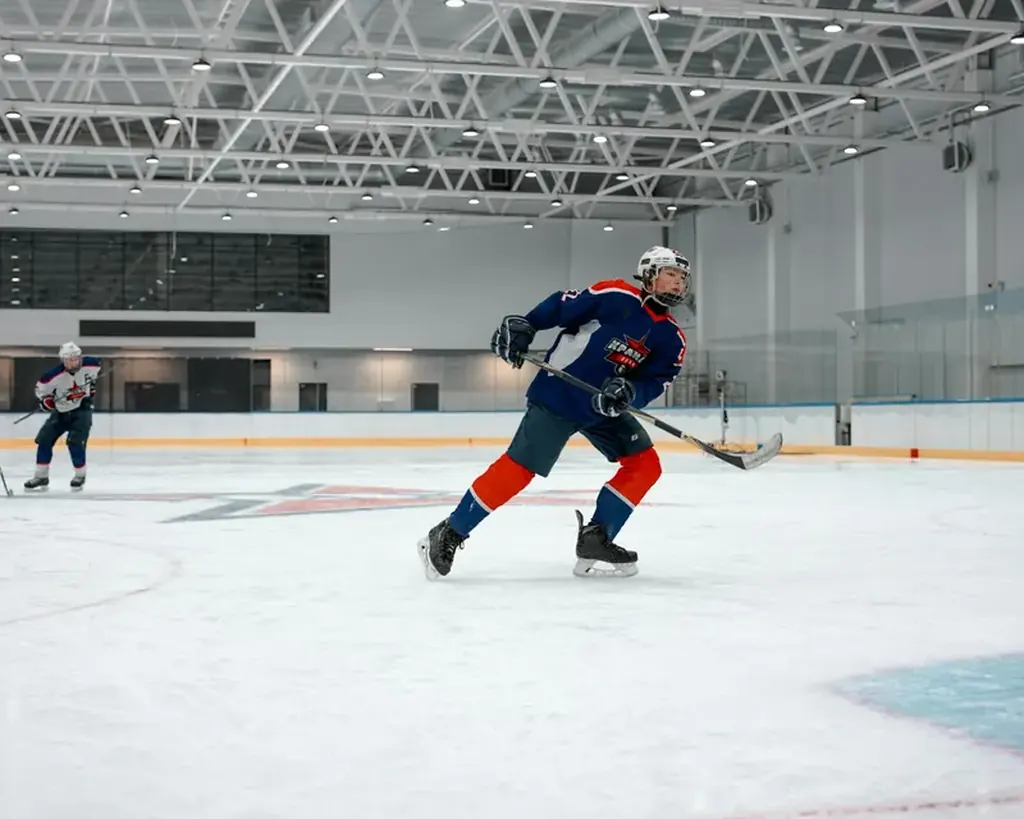
Alright, let's break down one of hockey's most debated rules. Whether you're a new fan at Rogers Arena or a longtime follower of the Vancouver Canucks, understanding the offside rule is key to seeing the game's strategy unfold. This glossary will explain the terms you hear every broadcast and how they directly impact our Canucks.
Offside
This is the fundamental rule that prevents "goal-hanging." An attacking player cannot precede the puck into the offensive zone (the area from the opponent's blue line to their goal line). Both of the player's skates must be completely behind or in line with the blue line when the puck crosses it. This rule structures the game's flow and entry strategies.Delayed Offside
This occurs when an attacking player is in the offensive zone before the puck, but the defending team gains possession and control of the puck. The linesman will signal a delayed offside with an upraised arm, and the attacking team must "tag up" by having all players exit the zone to nullify the offside and re-enter legally.Tag-Up Offside
This is the mechanism to clear a delayed offside. All attacking players must skate back and touch the blue line with at least one skate, thus establishing themselves back onside. Once they do this while their team maintains possession, they can re-enter the offensive zone legally. The Canucks often use quick tag-ups to maintain pressure.Zone Entry
This is the act of carrying or passing the puck from the neutral zone into the offensive zone while maintaining onside status. Successful, controlled zone entries are a huge focus for teams like the Canucks, who rely on skilled players like Quinn Hughes to lead this effort.Blue Line
The two lines, each 12 inches wide, that divide the rink into the attacking, neutral, and defending zones. They are the official markers for determining offside. The precise positioning of a player's skates relative to this line is what video review often scrutinizes.Onside
The legal position for an attacking player entering the offensive zone. A player is onside if the puck precedes them completely across the blue line, or if they have at least one skate in contact with or behind the blue line as the puck crosses it.Offside Challenge
A coach's challenge initiated by a team to review a potential missed offside call on a play leading to a goal. If the challenge is successful, the goal is wiped out. Head Coach Rick Tocchet must weigh the risk of a failed challenge, which results in a minor penalty for delay of game.Video Review
The process where the NHL Situation Room in Toronto reviews challenged plays, including offside, to make a final ruling. They use multiple camera angles, often zooming in frame-by-frame, to determine the exact position of a player's skate and the puck.Breaking the Plane
This refers to the moment the puck completely crosses the imaginary vertical plane of the blue line. It's not about the puck being on the line; it must be fully over it. This "plane" is what matters for both offside and icing calls.Possession and Control
A key distinction in offside rulings. A player has "control" when they are deliberately directing the puck, not just deflecting it. If a defending player clearly controls the puck and directs it out of their zone, any offside is automatically waved off.Intent to Blow
A principle where the linesman's decision is based on the moment they intended to blow the whistle to stop play, not necessarily the exact moment the whistle sounds. This can sometimes lead to controversial non-calls on close offside plays.Skate Drag
A technique where a player entering the zone keeps their trailing skate in contact with the ice and onside at the blue line as they stride forward. Players like Elias Pettersson are masters of this, allowing them to enter at full speed while staying legal.Offside Pass (Two-Line Pass)
This old rule, eliminated in 2005, prohibited passes from a team's defensive zone across the center red line. Its removal opened up the game and increased offensive flow, a change that benefits skilled, fast teams in the NHL.Neutral Zone Trap
A defensive strategy focused on clogging the neutral zone to force turnovers and prevent clean zone entries. When the Canucks face teams that employ this, their ability to make precise, timing-based entries becomes even more critical.Quick Up
A breakout pass aimed to spring a forward for a fast zone entry before the defense can set up. J.T. Miller is often on the receiving end of these passes from Hughes or Demko, trying to beat the defense to the line.Offside Faceoff
When an offside violation is called, play stops and the ensuing faceoff is taken outside the offensive zone, typically at one of the faceoff dots in the neutral zone. This punishes the attacking team by losing territorial advantage.Hybrid Icing
While primarily an icing rule, it's related to puck movement and zone clearance. It was adopted for player safety to reduce dangerous races. A team like the Canucks, with mobile defensemen, can use this rule to safely clear the puck under pressure.Sustained Pressure
This is the offensive ideal that follows a clean zone entry. By entering legally and maintaining possession, a team like the Canucks can cycle the puck, create scoring chances, and force the defending team into fatigue—a key for Stanley Cup Playoffs success.The "Millimeter" Reviews
A fan term for the ultra-close offside reviews where a player's skate might be a hair's breadth off the ice or over the line. These reviews can be thrilling or agonizing, as they have reversed many goals across the league.Strategic Retreat
A tactic where an attacking team, facing a tight defensive setup at the blue line, will pull the puck back into the neutral zone to regroup and attempt a new zone entry with better numbers or positioning. It requires patience and puck control.Offside as a Defensive Tool
Smart defensive teams will sometimes step up at the blue line in unison to force an offside call, stopping the play and interrupting the attacker's momentum. It's a subtle but effective way to break up an opponent's rhythm.Zone Denial
The defensive counterpart to zone entry. It's the act of preventing the attacking team from cleanly entering the offensive zone, often by standing up at the blue line or angling attackers to the outside. A hallmark of a well-coached team under Coach Tocchet.Transition Game
The rapid shift from defense to offense (or vice versa). A successful transition for the Canucks often hinges on their star players making a quick, accurate first pass to beat the opposing team's forwards before they can set up their offside trap.Coaching Strategy
A team's systematic approach to gaining the offensive zone. General Manager Patrik Allvin and the hockey ops staff build a roster to execute a specific style, whether it's a speed-based attack or a more controlled cycle game, all starting with that clean zone entry.So, there you have it. The offside rule is more than just a stoppage in play; it's a chess match at 20 miles per hour. For the Vancouver Canucks, mastering the nuances of zone entries and defensive denials can be the difference between a frustrating loss and a dominant win. It’s a foundational element that shapes every shift, every game, and ultimately, the quest through the NHL Pacific Division and beyond. Want to dive deeper into Canucks strategy? Check out our latest analysis on the Canucks News & Updates hub.
Reader Comments (1)