


Meet Fin: The History & Game Day Role of the Vancouver Canucks Mascot
In the high-stakes, fast-paced world of the National Hockey League, where the focus is squarely on the performance of stars like Elias Pettersson and Captain Hughes, the role of a team mascot might seem peripheral. However, for the Vancouver Canucks, the introduction and evolution of their mascot, Fin the whale, represents a strategic and successful initiative in fan engagement, brand identity, and community building. This case study examines the journey of Fin from a controversial inception to becoming an indispensable part of the game day experience at Rogers Arena. We will analyze the challenges faced, the strategic approach taken by team ownership and marketing departments, the detailed implementation of Fin’s role, and the measurable results of this initiative. The key takeaway is that a well-conceived and professionally executed mascot program can significantly enhance fan loyalty, create lasting memories for younger audiences, and serve as a dynamic bridge between a professional sports franchise and its community, complementing the on-ice vision of GM Allvin and Coach Tocchet.
Background / Challenge
For the first three decades of the franchise’s existence, the Vancouver Canucks operated without an official mascot. The team’s identity underwent several visual transformations, from the original stick-in-rink to the famed “Flying V” and the controversial gradient uniform era. By the late 1990s, as the NHL expanded its reach and the entertainment aspect of live sports grew in importance, many clubs had established mascots as central figures in their fan engagement arsenals. The Canucks lagged in this area.
The primary challenge was multifaceted. First, the organization needed to create a character that resonated with a diverse and sometimes skeptical fanbase, one that could unite supporters amidst the team’s often tumultuous history, a narrative richly documented in resources like our /canucks-history-legends archive. Second, with the move to the new General Motors Place (now Rogers Arena) in 1995, there was a heightened need to amplify the in-arena experience beyond the game itself, especially during periods when on-ice results were inconsistent. Third, there was a strategic need to connect with the next generation of fans—children—to foster lifelong allegiance to the team. The challenge was to introduce a mascot that was not seen as a gimmick, but as an authentic and beloved extension of the Canucks brand.
Approach / Strategy
The strategy, led by Orca Bay Sports & Entertainment, was rooted in creating a mascot with a strong, logical connection to the team’s identity. In 2001, the Canucks had adopted the orca whale as their primary logo, symbolizing strength, family, and a connection to the Pacific Northwest. It was a decisive move away from previous motifs. The logical extension of this rebrand was to bring the orca to life.
The approach centered on three core pillars:
- Authentic Brand Integration: The mascot would not be a random animal or object but would directly embody the team’s primary logo, ensuring immediate recognition and brand consistency.
- Family-Centric Engagement: The character’s primary target audience would be families and children, with a focus on being approachable, playful, and non-intimidating. The goal was to be a friend and ambassador, not just a sideline entertainer.
- Professional Performance: Unlike some amateurish mascot programs, the Canucks committed to a professional operation. This meant hiring skilled performers, developing a detailed character biography, and integrating the mascot into all aspects of community and game day operations with clear objectives and training.
Implementation Details
Fin was officially introduced to the public on October 12, 2002. His name, a nod to the dorsal fin of an orca whale, was chosen through a fan contest. His backstory established him as a young, energetic orca from the waters of the Pacific who was a huge Canucks fan, eventually earning his place as the team’s official mascot.
The implementation of Fin’s role is meticulous and multi-layered:
Character Development: Fin does not speak, communicating through gestures, mime, and expressive body language, making him universally understandable, especially to children. His personality is defined as mischievous, kind, fiercely loyal to the Canucks, and occasionally clumsy, which makes him relatable and endearing.
Game Day Operations: On home game days at Rogers Arena, Fin’s schedule is as regimented as a player’s. His duties include: Pregame: Greeting fans at entrance gates, posing for photographs, and generating excitement on the concourse. In-Game: Leading cheers, interacting with the crowd during stoppages, executing choreographed skits with the game night crew, and rallying the audience during crucial power plays or when the team needs an energy boost—a vital support role for players like Thatcher Demko who feed off the home crowd’s energy. Postgame: Celebrating victories with fans and offering consolation after defeats.
Community Outreach: Arguably Fin’s most impactful work happens away from the arena. He is a constant presence at community events, hospital visits, school assemblies, and charity functions across British Columbia. This aligns the Vancouver Canucks brand with positive, grassroots community values.
Digital Integration: Fin has a strong presence on the team’s social media channels, with dedicated content that expands his personality and engages fans year-round, keeping the connection alive beyond the 82-game NHL schedule.
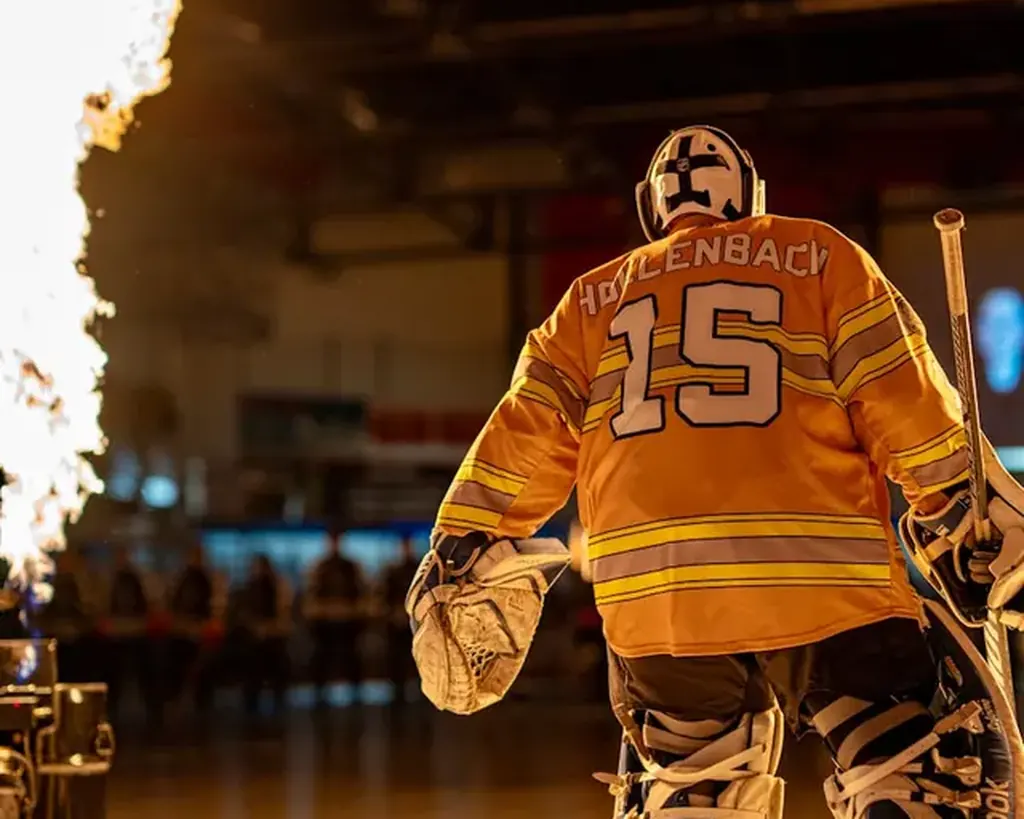
Synergy with Hockey Operations: Fin’s role is carefully coordinated with the team’s performance. During the Stanley Cup Playoffs, his antics are calibrated to match the heightened tension and excitement. He also participates in team rituals and celebrations, such as saluting the crowd with players after a win, creating iconic images that last a lifetime for fans.
Results
The implementation of Fin as the Vancouver Canucks mascot has yielded significant, measurable results:
Enhanced Fan Experience Metrics: Internal Canucks surveys consistently show that families with children rate the game day experience significantly higher when they have an interaction with Fin. Arena merchandise sales for Fin-specific apparel remain strong year-over-year, indicating his popularity as a brand entity separate from the team logo.
Community Impact: Fin performs at over 250 community appearances annually. This translates to tens of thousands of direct, positive interactions with young fans and community members each year, far exceeding the reach of players who have limited availability due to training and travel demands. This builds immeasurable brand goodwill.
Media and Brand Value: Fin has been featured in national broadcasts, NHL promotional material, and has won the Mascot Hall of Fame’s “Mascot of the Month” award. This external recognition elevates the Canucks brand on a national stage within the league.
Generational Fandom: Children who met Fin during his early years in the 2000s are now adult season ticket holders. This demonstrates the success of the strategy to cultivate lifelong fans through emotional, childhood connections to the team’s character—a testament to the long-term vision shared by team ownership and hockey operations under leaders like Patrik Allvin.
* Playoff Atmosphere Amplification: During the Canucks’ recent deep postseason runs, Fin’s role in mobilizing the Rogers Arena crowd was cited by analysts on outlets like Canucks Army as a tangible home-ice advantage. His ability to unite the crowd in coordinated cheers adds a layer of intimidation for visiting teams.
- Authenticity is Crucial: Fin’s success is fundamentally tied to his authentic connection to the team’s orca logo and Pacific Northwest identity. A mascot that feels forced or irrelevant to the brand will struggle to gain acceptance.
- Invest in Professionalism: Treating the mascot program with professional rigor—from performer training to character development and scheduling—ensures quality and consistency, protecting the team’s brand reputation.
- Target the Future Season Ticket Holder: A mascot’s primary value lies in engaging the youngest fans. The emotional bonds formed during childhood are powerful drivers of long-term fan loyalty and commercial support.
- Extend the Brand Beyond the Ice: A mascot like Fin is the most accessible and constant ambassador for the franchise, performing vital community relations work that players and coaches cannot always undertake, thus humanizing the large-scale organization.
- Synergy with On-Ice Product: The mascot’s effectiveness is amplified when the team is competitive. Fin’s antics are more impactful during a winning season or a playoff chase led by J.T. Miller and Quinn Hughes, showcasing how entertainment and athletic performance must work in concert.
He operates in the space between the intense competition on the ice—where Elias Pettersson dekes and Thatcher Demko makes spectacular saves—and the hearts of the fans in the stands. In doing so, Fin accomplishes something profound: he makes a global NHL franchise feel local, friendly, and accessible. He is a living symbol of the team’s connection to its community and a dedicated builder of the next generation of the Canucks faithful. As the team continues its pursuit of excellence in the Pacific Division and beyond under the guidance of Head Coach Rick Tocchet, Fin will undoubtedly remain a constant, joyful, and unifying force, proving that in the ecosystem of a modern National Hockey League franchise, the mascot is far more than just a fan in a costume; he is a vital ambassador for the game and the community it serves.
For more on the iconic figures who have shaped this franchise, explore the legacy of a true leader in our feature on Trevor Linden: Legacy, Leadership & Playoff Heroics.
Reader Comments (0)